
Custom Shopify Development vs Pre-Built Themes: Which Is Right for Your Store?
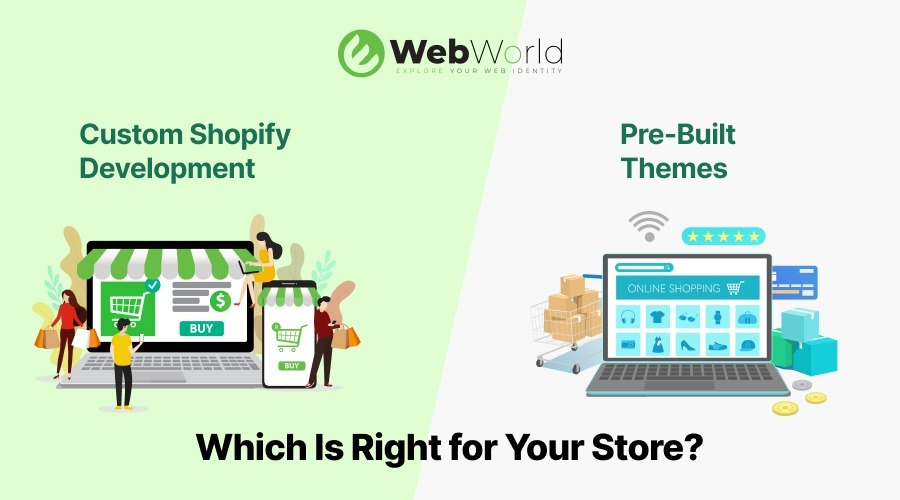
Choosing how your Shopify store is built is one of those decisions that looks simple on the surface, but quietly influences everything that follows. From how fast your pages load to how easily customers move through checkout, the foundation you choose affects performance, scalability, and revenue.
Most store owners eventually face the same question: should you launch with a pre-built Shopify theme or invest in custom Shopify development? Pre-built themes promise speed, lower upfront costs, and an easier setup. Custom development, on the other hand, offers flexibility, tailored functionality, and room to grow. Both options can work, and both can cause friction if chosen at the wrong stage.
The real issue isn’t which option is better in general. It’s which one aligns with your business goals, growth plans, and current constraints. A solution that works perfectly for a new store testing the market may quickly become limiting for a brand focused on conversion optimization and scale.
In this guide, we’ll break down the real differences between pre-built Shopify themes and custom Shopify development, explain when each approach makes sense, and help you decide which path supports your store not just today, but as it grows.
Pre-Built Shopify Themes: Pros & Cons
Pre-built Shopify themes are ready-made templates that allow businesses to launch an online store quickly without deep technical work. Available through the Shopify Theme Store and third-party marketplaces, these themes come with predefined layouts, design styles, and basic functionality.
They’re built to suit a wide range of industries, which makes them especially appealing for new stores, MVPs, or brands that want to test an idea fast. Customization is mostly visual like colors, fonts, sections, and layout tweaks, while the core logic of the store remains largely unchanged.
Pros of pre-built Shopify themes:
- Faster launch with minimal setup time
- Lower upfront cost compared to custom development
- Beginner-friendly and easy to manage
- Shopify-approved structure and stability
Cons of pre-built Shopify themes:
- Limited flexibility as the business grows
- Heavy reliance on apps for advanced functionality
- Performance and speed can suffer over time
- Stores often end up looking similar
- Harder to scale without workarounds or rewrites
Pre-built themes work well at the right stage, but they’re not designed to support every growth scenario long-term.
Custom Shopify Development: Pros & Cons
Custom Shopify development means building your store around your business instead of fitting your business into a template. Rather than starting with a pre-built theme, developers create custom layouts, templates, and functionality tailored to how your customers browse, shop, and convert.
This approach allows full control over user experience, performance, and backend logic, from custom product flows and checkout behavior to deeper integrations and CRO-focused features. It’s a deliberate build, not a visual upgrade.
Pros of custom Shopify development:
- Full design and UX flexibility
- Tailored functionality aligned with business goals
- Better performance and cleaner code
- Easier to scale without app overload
- Stronger foundation for SEO and conversions
Cons of custom Shopify development:
- Higher upfront investment
- Longer development timeline
- Requires experienced Shopify developers
- Not always necessary for very early-stage stores
Custom Shopify development isn’t about complexity, it’s about control, scalability, and building a store that can grow without hitting structural limits.
Pre-Built Shopify Themes vs Custom Shopify Development
| Aspect | Pre-Built Shopify Themes | Custom Shopify Development |
|---|---|---|
| Speed to Launch | Very fast. Stores can go live in days. | Takes more time due to planning and development. |
| Upfront Cost | Lower initial cost. | Higher upfront investment. |
| Design Flexibility | Limited to theme layouts and sections. | Fully flexible, designed around brand and UX goals. |
| Customization Level | Mostly visual changes (colors, fonts, sections). | Code-level customization and tailored functionality. |
| Performance & Speed | Can slow down over time due to app reliance. | Optimized code results in better performance. |
| Scalability | Becomes restrictive as the business grows. | Built to scale without structural limitations. |
| SEO Control | Basic SEO-friendly structure. | Advanced SEO optimization opportunities. |
| Conversion Optimization | Limited CRO options without heavy workarounds. | CRO baked into layouts, flows, and logic. |
| Long-Term Cost | App subscriptions and fixes add up. | Lower long-term costs due to cleaner architecture. |
| Best For | New stores, MVPs, quick launches. | Growing brands, competitive markets, scaling stores. |
When a Pre-Built Shopify Theme Makes Sense
A pre-built Shopify theme is often the right choice when your priority is getting online quickly without heavy investment. At certain stages, speed and simplicity matter more than flexibility or advanced customization.
A pre-built theme makes sense if:
- You’re launching a new or early-stage store
- You’re testing a product, niche, or market fit
- Your product catalog is small or straightforward
- Your budget is limited and needs to stay predictable
- You need to go live on a tight timeline
- Your store doesn’t yet require complex logic or integrations
At this stage, a theme helps you validate ideas, understand customer behavior, and start generating revenue without overbuilding. The key is recognizing that a theme is a starting point, not a permanent foundation. When growth demands more control, performance, or differentiation, that’s when the conversation naturally shifts toward custom Shopify development.
When Custom Shopify Development Is the Smarter Choice
Custom Shopify development becomes the better option when your store is no longer just launching, it’s growing, competing, and optimizing. At this stage, limitations from themes and app-heavy setups start to show up as slower performance, restricted user flows, and missed conversion opportunities.
Custom Shopify development is the smarter choice if:
- Your store is scaling and traffic is increasing
- You operate in a competitive or crowded niche
- Conversion rate optimization is a priority
- You need custom product logic or checkout flows
- Your site relies on too many apps to function properly
- You want better performance, speed, and SEO control
- Your brand needs a differentiated user experience
For growing businesses, cleaner code, tailored UX, and purpose-built functionality make it easier to convert traffic into revenue and adapt as your business evolves. This is where working with a Shopify expert developer becomes a strategic investment.
Concluding Thoughts
There’s no universal winner in the debate between custom Shopify development and pre-built themes. The right choice depends on where your business is today and where you want it to go next. For early-stage stores, a pre-built theme can be a practical way to launch quickly and validate ideas. For growing brands, those same themes often become a constraint rather than a solution.
What matters most is alignment. If your priority is speed and simplicity, a theme may be enough for now. But if you’re focused on scalability, performance, and conversion optimization, custom Shopify development gives you the flexibility to build intentionally instead of working around limitations.
If you’re unsure which stage your store is in, a conversation with a Shopify expert developer can help clarify whether your current setup is supporting growth or quietly holding it back. Sometimes, the smartest move isn’t a full rebuild, it’s knowing when and why to make one.
People Also Ask
1. Can I start with a pre-built Shopify theme and switch to custom later?
Yes. Many businesses begin with a theme and move to custom development as their store grows and needs more flexibility.
2. Is custom Shopify development worth the cost?
It can be. For growing or competitive stores, custom development often pays off through better performance, conversions, and scalability.
3. Do custom Shopify stores perform better than theme-based stores?
Generally, yes. Custom builds allow cleaner code, fewer apps, and optimized user flows, which can improve speed and conversions.
4. How do I know if my store has outgrown its Shopify theme?
If you rely on too many apps, face performance issues, or struggle to customize key flows, your store may have outgrown its theme.
5. Do I need a Shopify expert developer for custom development?
Yes. Custom Shopify development requires experience with Shopify’s architecture, performance optimization, and scalable coding practices.

Co-Founder & CMO at eWebWorld
Rahul Chandrawanshi is the Co-Founder and Chief Marketing Officer at eWebWorld, where he contributes to business strategy, digital growth, and client success. He brings a business-focused perspective to case studies, highlighting the challenges businesses face, the solutions implemented, and the outcomes achieved through digital experiences and technology.
Search
Popular Posts

Follow us

Recent Posts



About eWebWorld
eWebWorld is a Shopify and eCommerce development company in India with 10+ years of experience building and scaling online stores. We specialize in Shopify development, including store setup, customizations, theme development, migrations, integrations, and performance optimization. Through our expertise in eCommerce, technology, and digital marketing, we help businesses create better online experiences and achieve sustainable growth.